Keeping A Battery Current
It's better to keep them alive than to shock them back to life.

“With an anxiety that almost amounted to agony, I collected the instruments of life around me, that I might infuse a spark of being into the lifeless thing that lay at my feet.”
~Shelley, Mary Wollstonecraft (Godwin). Frankenstein.
A motorcycle reminded me that batteries don’t last forever, even those branded by a proud British motorcycle company and priced accordingly. But I’ll get back to that. Like motorcycles, airplanes can sit unused for long periods. These idle periods can often be predicted; like the north’s dark, cold winter or the oven-like heat of the southwest’s summer. But unanticipated events also keep us from aviating (or motorcycling, or boating) for extended periods. This trebles our disappointment when a rare opportunity to fly is thwarted by a battery that has become a useless container of lead or lithium.
The oft drawn-out nature of homebuilding can also conjoin batteries to airframes long before they’re required to spark an engine to life. They’re installed during the fabled “90% done, 90% to go” phase of building. The phase that turns a static display into an airplane. The phase that almost always includes wiring.
Few builders delay buying the battery until the day it is necessary—I didn’t. Who doesn’t want to see their panel light-up at the first opportunity, or show off the pulsing landing light to anyone who comes within one hundred yards of their hangar? That makes the battery suffer the same show-and-tell over and over. And over. And over. The snapping sound from the light’s power unit is also the sound of the battery inching toward its demise, one demonstration at a time.
But here’s good news. Batteries that get infrequent use, or wait months or years to feel a tingle of an engine’s alternator, can have their life extended beyond their warranty period with the current (no pun intended) breed of battery maintainers. That effort, however, must begin shortly after the battery is purchased.
What Damages A Battery?
Batteries are damaged by a variety factors, including extreme heat and cold, high humidity, over-charging, and undercharging. It’s the last two that likely bring most batteries to their early demise. Left sitting, lead acid batteries develop lead sulfate on their plates. The lead sulfate converts back to lead, lead oxide and sulfuric acid as the battery is charged. A battery that remains unused for a long period develops a more stable lead sulfate crystal, which permanently degrades the battery. Suffice it to say a battery on a non-flying airplane is not experiencing proper charging cycles and is suffocating on sulfation.
Connecting a battery to an ordinary charger and letting it cook is equally damaging. That can cause the electrolyte to boil off, or the gasses to expand until the battery is damaged or bursts.
Lithium batteries are growing in popularity. Unused, they discharge at a much slower rate than lead acid batteries yet provide (nearly) full cranking voltage and amperage right up until the moment they die. That’s the good news. The bad news is they need much closer attention when charging, and they give no warning that they just gave their all to an engine start. No tell-tale “click-click-click” from an under-powered starter solenoid, only silence.
Lithium batteries can be damaged by sitting with a 100% charge as well as a 0% charge. Further, the charging of each cell in the battery (A 12V lithium iron phosphate, or LiFePO4, battery has four 3.3 volts cells) must be carefully balanced with the others as the battery is charged and discharged. Circuitry in the battery helps with that. Still, a well-established lithium battery manufacturer states, “A cell [can be] permanently damaged if over-charged or over discharged just one time. In the case of overcharging, cells can rupture, and the entire battery will need to be replaced.”
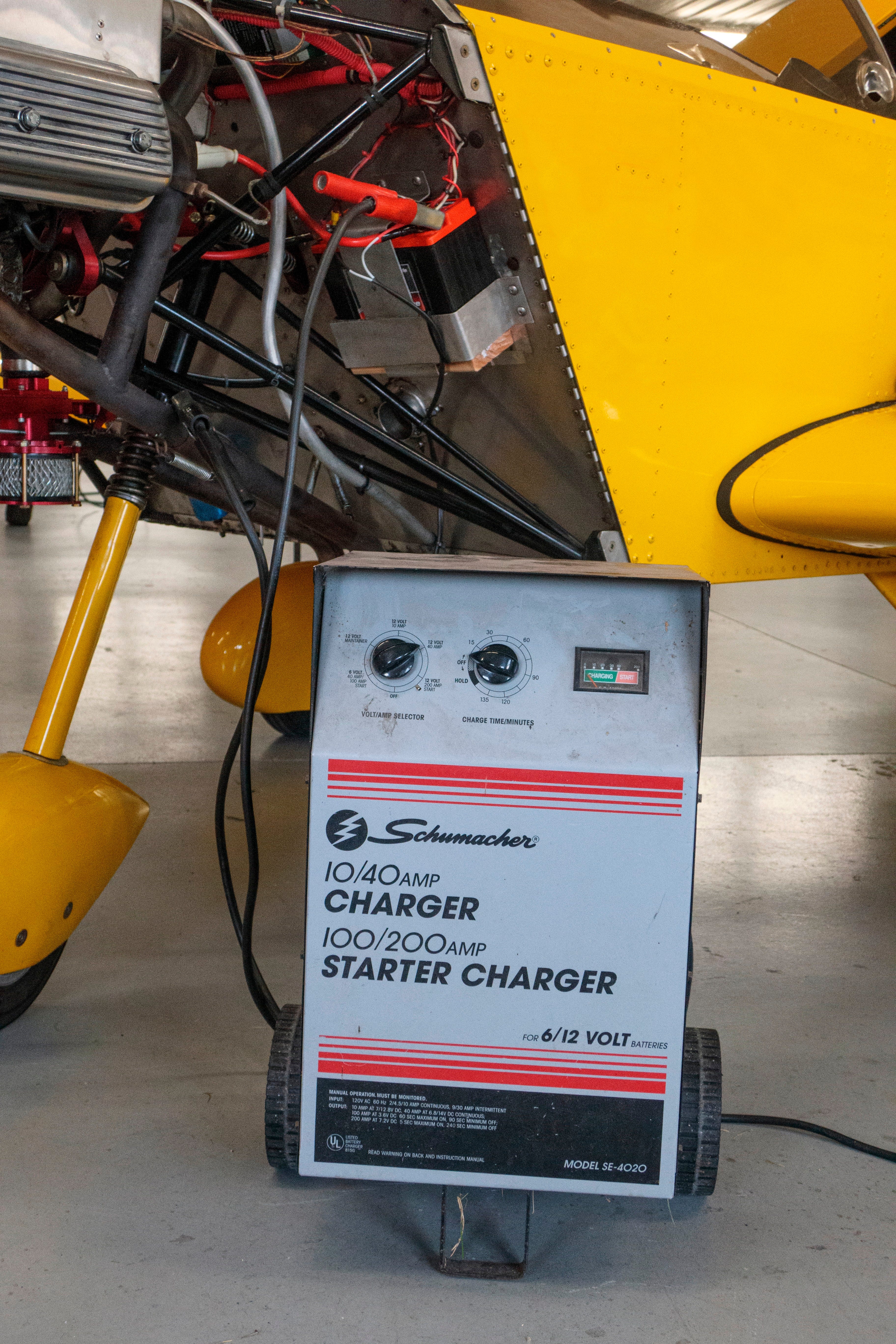
All of this makes it obvious that using a forty-year old Sears battery charger to charge or “maintain” a battery, any battery, is poor form.
Charging vs. Maintaining
There was a day when a weak or dead battery was met with a suitcase-sized battery charger whose charge level was set commensurate with the need to get the vehicle started. Setting the amperage switch to the START position would jolt the battery, and therefore the vehicle, with enough amperage to animate a toy truck. And off we went, likely to be stranded with a still-dead battery at our destination. If we had time, the switch might be set to the 10- or 5-amp charge position and the battery left to charge longer; maybe overnight. We’d return to the smell of sulfur and a hot, somewhat bloated battery that’s boiling inside. In either case the battery had been damaged and its life effectively ended. The trickle charge setting on the old chargers, used to “maintain” a seldom-used battery, fed a low-but-steady diet of amps to the battery, regardless of the battery’s need, with similarly destructive results.
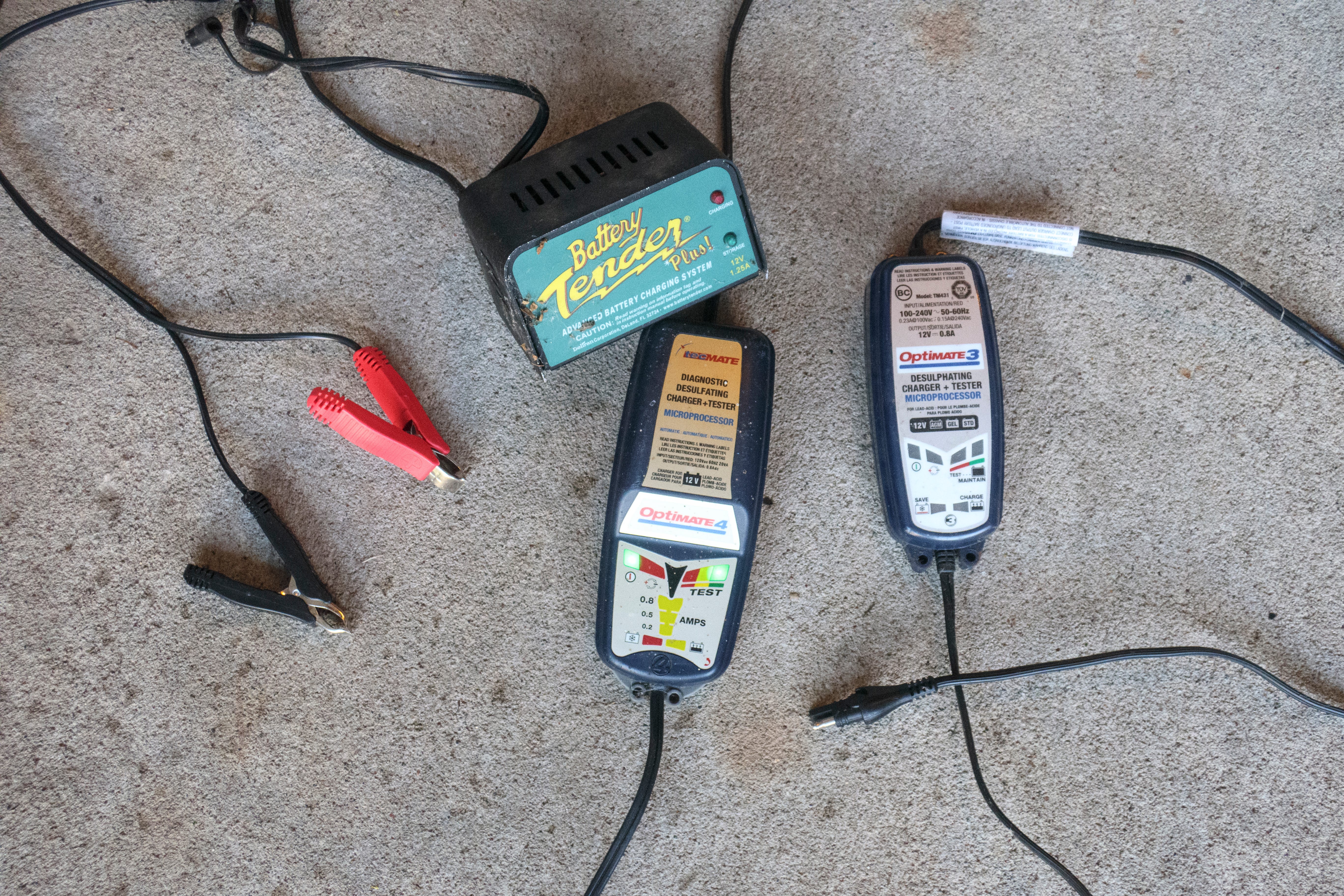
Unlike a battery charger, a battery maintainer senses a battery’s condition and regulates its charge as necessary. A maintainer can sense sulfation and enter desulfation mode, by increasing its output. A maintainer can vary the charging amperage as the battery charges and discharges, eventually entering a maintenance mode, which keeps the battery at the proper state of charge without a constant, damaging input.
Maintainers often have an array of lights that indicate the active mode (charging, desulfation, maintaining) and can warn of incorrect polarity of the attached leads and serious faults with the battery. Maintainers do not have user-settable switches; they do their thing automatically. If what you’re connecting to your battery has switches, it’s probably a charger.
Selecting the correct battery maintainer for a particular battery should begin with the battery manufacturer’s specifications and recommendations, not the recommendation of a buddy who may have a different battery than you. Battery maintainers for lead acid and lithium batteries can seldom be interchanged. Earth-X Batteries goes so far as to recommend specific chargers for their batteries.
Don’t let the cost of a maintainer deter you. A proper maintainer will pay for itself by extending the battery’s life and reliability. Keep the maintainer connected to the battery 24/7/365. Trying to revive a depleted battery with a blunt-force charger is not maintenance, its whimsy. However, I rescued a severely depleted battery once by letting it sit quietly on a maintainer for a number of days.
If In Doubt, Replace It
Back to my motorcycle battery…
The battery, which always suckled a maintainer when not in use, powered up the headlight and fuel pump, and energized the start circuit, but the headlight fell dark, the bike silent, when I pressed the start button. The diagnostic lights on the maintainer indicated a charge was being accepted, but when I pressed the start button the fault lights on the maintainer illuminated.
I checked the bike’s fuses and began strategically tapping electrical components, but the bike’s wiring harness is mostly inaccessible and the owner’s manual, which lacks a schematic, makes frequent references to contacting a dealer for service. When removed from the bike, the battery showed a small charge being accepted from two different battery maintainers, but when placed back in the the bike the starter button again darkened the bike’s headlight and illuminated the maintainer’s fault lights.
Bad starter pushbutton? Faulty clutch interlock? I pulled and released the clutch lever a few times (ah, the silly things we do when problems arise) and the bike’s lights came back on as the fuel pump whirred to life. Still, it would not start.
Before getting deep into wiring for which I had no schematic, I took the battery—which I knew to be at least three girlfriends old—to a dealer, who tested it on three different testers. Two indicated it was bad, one pronounced it good. Playing the odds, I left with a new battery and a new riding season commenced.
Similarly, I pulled a PWC out of winter storage and despite it being on a maintainer all winter, and the maintainer showing all green lights, the battery was faulty and gave me only a single click from its anemic 9 volts when I pressed the start button. While maintainers can keep a battery healthy and extend its life, they can’t fix one that’s broken.

Batteries are wear items, even with the best care. You may be able to shock a failing battery to life once or twice but, if it comes to that, its full demise is imminent. Replace it. A dead battery won’t restart an engine that dies on a long, low final approach and it won’t power a radio for an emergency transmission.

Great article Kerry! I also read your article in the EAA August issue about condition inspections. I have a Sonex Waiex and I’m having battery issues and trying to figure out the best way forward. Although, I don’t think the battery is the only issue, as the alternator is not charging the battery until the power reaches 2400 rpm’s. I have a Jabiru 3300. Anyway, I enjoyed your articles! Fly safe!